
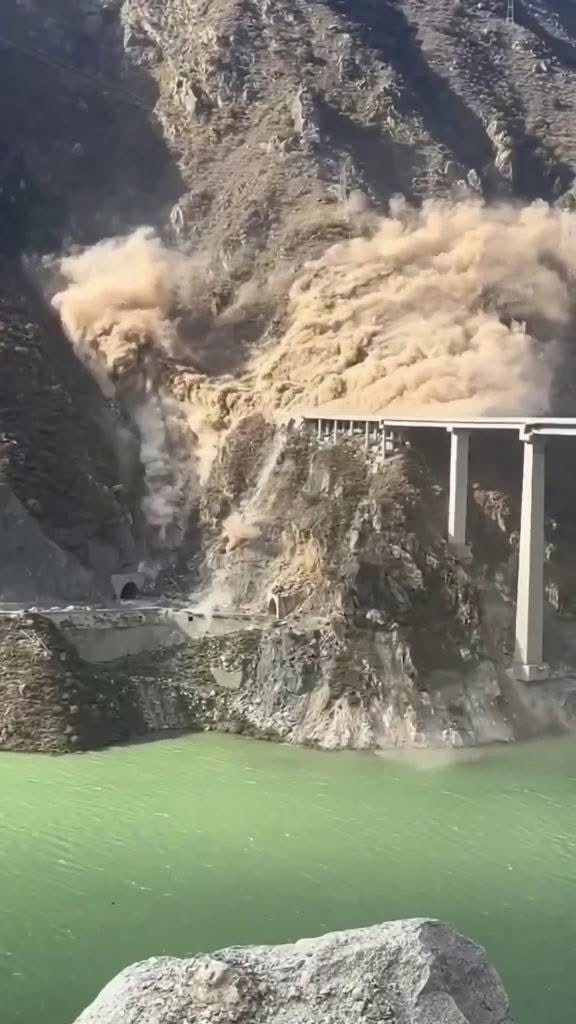
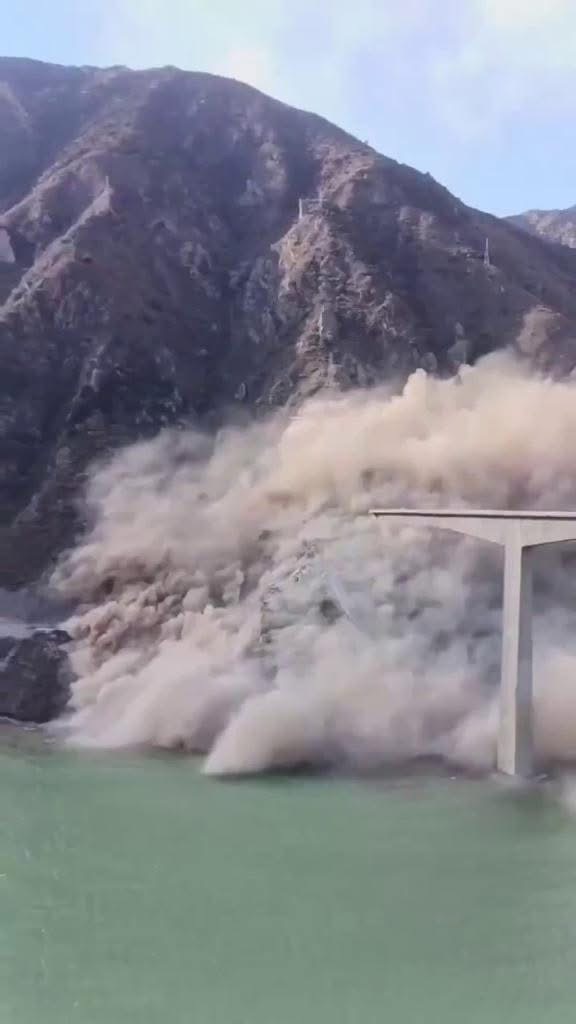
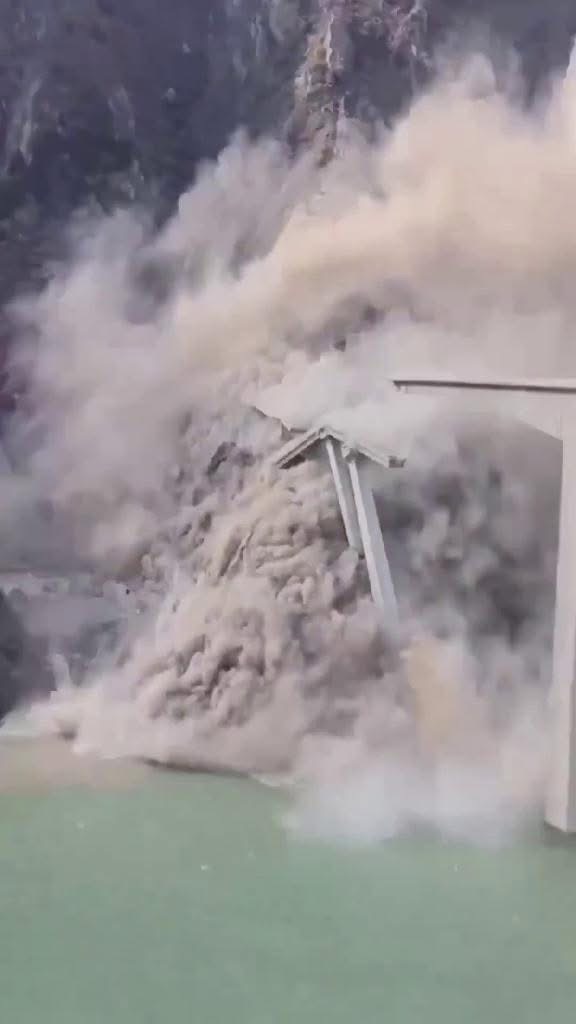
A major infrastructure failure has struck southwestern China after the Hongqi Bridge, a 758-meter-long span in Sichuan Province, collapsed just months after its grand opening. The bridge, part of the country’s extensive National Highway 317, had only recently begun operations when disaster struck, raising urgent questions about construction standards and geological stability in the region.
[read more]
According to Reuters, the collapse occurred on Tuesday afternoon near the city of Maerkang, located within the Aba Tibetan and Qiang Autonomous Prefecture. The structure gave way following a series of landslides that destabilized the mountain slopes surrounding the bridge’s approach. Authorities had reportedly been monitoring cracks and deformations in the road for days, prompting them to take emergency precautions before the failure.
Local police made the critical decision to close the bridge to traffic shortly before the collapse, a move that experts say likely prevented fatalities. “The closure came just in time,” one local official said, noting that the area had shown clear warning signs of instability. As a result, no casualties have been reported — a rare outcome in incidents of this scale.
The Hongqi Bridge, completed earlier this year, was celebrated as a symbol of China’s ambitious infrastructure development program, designed to strengthen connectivity between remote mountain regions and the rest of the country. Its collapse so soon after opening has shocked residents and engineers alike, calling attention to the challenges of building in areas prone to seismic and geological activity.
Early investigations suggest that the failure was caused by slope movement and heavy rainfall, which triggered a landslide that undermined the bridge’s supporting structures. Officials have emphasized that, at this stage, there is no evidence of a design flaw in the main span itself. Still, engineering experts are urging a thorough inquiry to determine whether the site’s geological risks were adequately assessed during planning and construction.
In response to the collapse, authorities have rerouted traffic and launched emergency inspections of nearby bridges and tunnels to prevent further incidents. A task force composed of engineers, safety experts, and provincial officials has been deployed to evaluate the extent of the damage and develop a repair plan. Residents in surrounding communities have been warned to stay clear of unstable slopes as rains continue in the region.
While the absence of casualties has been met with relief, the event has reignited national debate over China’s rapid pace of infrastructure expansion and the balance between speed, cost, and safety. The Hongqi Bridge’s failure serves as a sobering reminder that even the most advanced projects remain vulnerable to the powerful natural forces shaping the country’s mountainous terrain. For now, investigations continue as officials seek to ensure such a tragedy is not repeated elsewhere.
 [/read]