
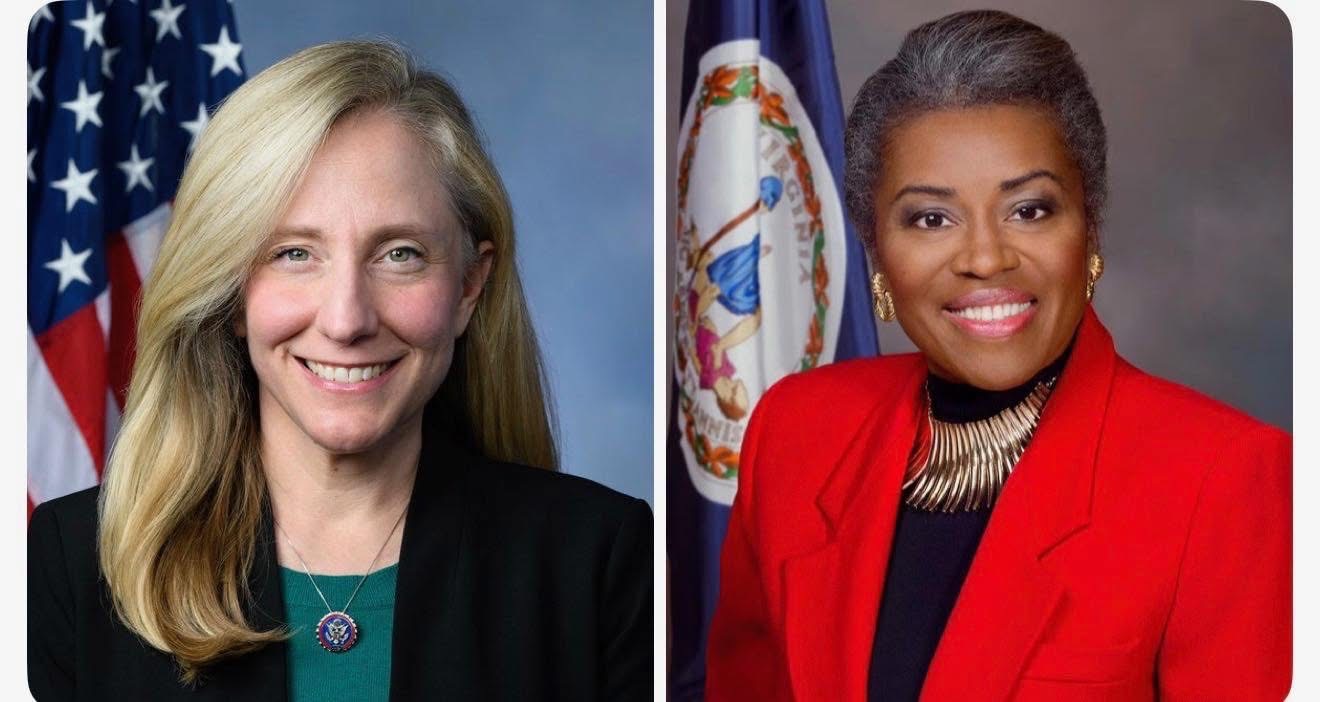
Democrat Abigail Spanberger has won the race for Governor of Virginia, according to projections from Decision Desk HQ. Her victory marks a historic shift in the state’s leadership, flipping the governorship back to the Democratic Party after four years under Republican control. Spanberger, a former congresswoman and CIA officer, defeated Republican opponent Winsome Earle-Sears, who currently serves as Virginia’s lieutenant governor.
[read more]
The win is being hailed as a major comeback for Democrats in Virginia, a state that has often swung between parties in recent election cycles. Spanberger’s campaign centered on themes of bipartisan cooperation, restoring trust in government, and addressing cost-of-living issues that have affected families across the commonwealth. Her message resonated strongly in suburban regions around Richmond and northern Virginia — areas that helped secure her victory and proved crucial to the final outcome.
For the Republican candidate Winsome Sears, the loss represents a setback after an energetic and historic campaign. Sears, the first Black woman to hold statewide office in Virginia, sought to continue the conservative policies of outgoing Governor Glenn Youngkin. She emphasized economic freedom, parental rights in education, and a tough-on-crime approach. Despite strong turnout in rural areas and the southwestern part of the state, her support was not enough to overcome Spanberger’s surge in population-dense regions.
Election night saw intense attention from national media and political strategists. Virginia’s contest was widely viewed as an early test of public sentiment ahead of the 2026 midterms. Analysts noted that Spanberger’s disciplined centrist message and reputation for pragmatism gave her an edge in a state that values moderation. Decision Desk HQ called the race late in the evening after final vote tallies showed Spanberger maintaining a clear and irreversible lead.
Voter turnout was notably high, reflecting strong engagement from both major parties. Early voting numbers had already suggested enthusiasm among Democrats, especially in urban and suburban counties. Election officials reported smooth operations at polling stations across the state, though some areas experienced long lines due to the heavy turnout. The Virginia Department of Elections is expected to officially certify the results in the coming days once absentee and provisional ballots are fully counted.
In her victory speech, Spanberger thanked Virginians for their trust and pledged to serve all residents, regardless of party affiliation. “This campaign was never about partisanship — it was about problem-solving,” she said to a cheering crowd in Richmond. “Together, we will build a Virginia that is fairer, safer, and more prosperous for everyone.” Winsome Sears, meanwhile, conceded the race gracefully, congratulating Spanberger and urging unity. She emphasized the importance of continuing to advocate for conservative values within the state.
The outcome of this election positions Virginia once again as a potential model for national political trends. With Spanberger’s victory, Democrats regain control of the governor’s mansion and strengthen their influence ahead of future statewide contests. Political observers are already speculating about how this win might affect the broader national landscape — both for Democratic momentum and for the strategies Republicans will adopt moving forward.
 [/read]