
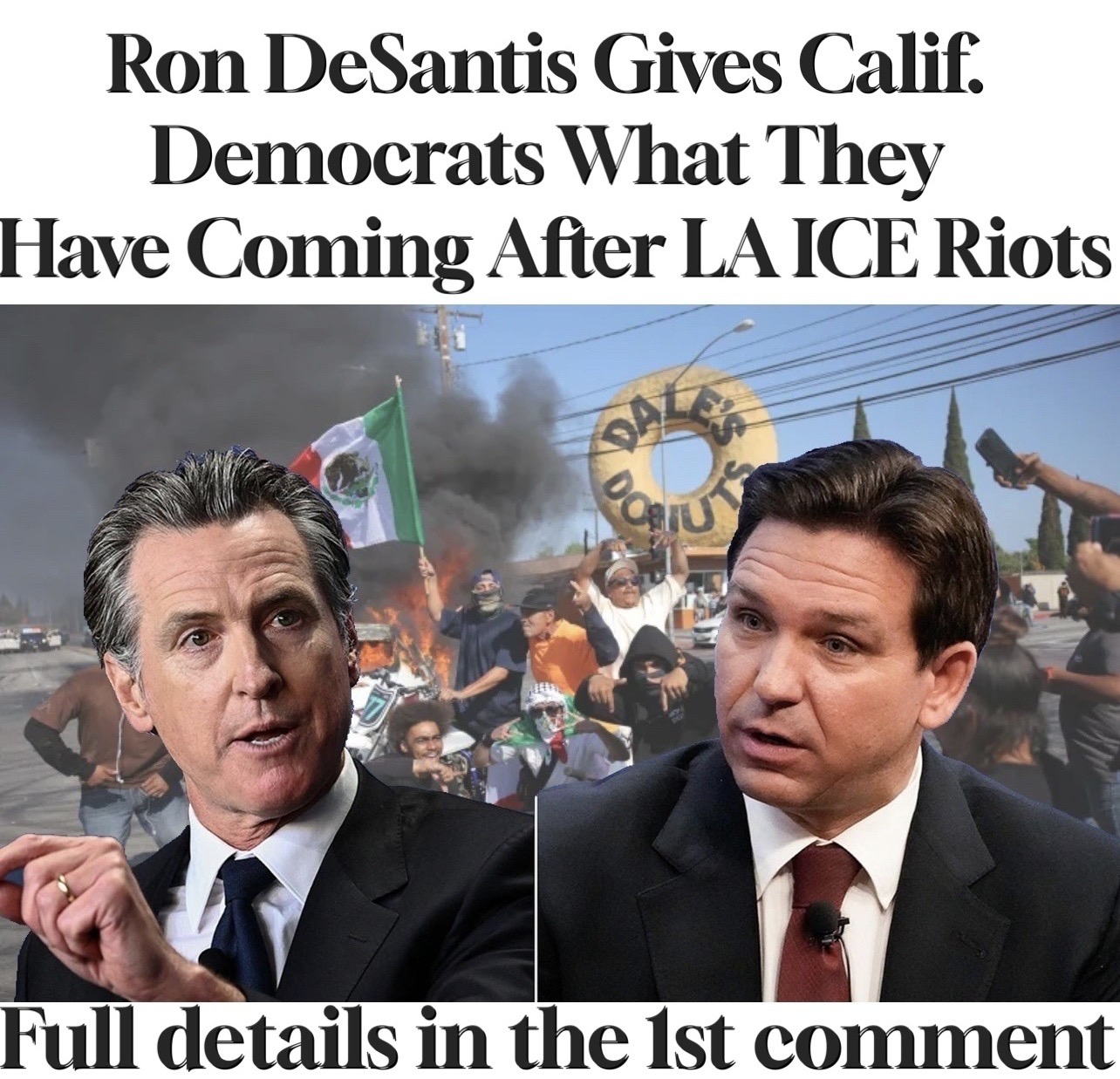
Florida Governor Ron DeSantis weighed in forcefully on the unrest in Los Angeles, condemning the violence and looting reported there. “They’re out there burning things down, massive looting…that DOESN’T FLY IN FLORIDA AT ALL!” he said, stressing that such lawlessness would not be tolerated in his state.
DeSantis made it plain that his administration would respond swiftly to attacks on public safety. “The MINUTE you attack law enforcement, rioting, looting, be prepared to have the LAW COME DOWN on you,” he warned, adding, “We WILL make an example of you.” His remarks framed a zero-tolerance approach to civil unrest.
[read more]
Speaking about recent demonstrations in Florida, DeSantis contrasted what he described as peaceful protest with violent chaos. “They said there was some protest [in Tampa]…they’re just holding signs,” he said, minimizing the significance of the Tampa demonstration and underscoring the difference between lawful protest and criminal behavior.
According to the governor, the Tampa event amounted to little more than a symbolic showing rather than a flashpoint for violence. He characterized the protest as a “NOTHINGBURGER,” suggesting it posed no real threat to public order or safety in the state.
DeSantis also highlighted the role of counter-protesters in Tampa, noting that they were met by what he called “MAGA patriots.” His comments praised those who confronted the demonstrators and implied that local supporters helped prevent escalation.
Taken together, the governor’s statements present a firm law-and-order stance: violent unrest will be met with decisive enforcement, while peaceful demonstrations are permissible so long as they remain nonviolent and orderly. DeSantis used the contrast with Los Angeles to reinforce Florida’s tougher posture.
The governor’s remarks are likely to fuel further debate about how states should handle protests and the balance between protecting public safety and preserving First Amendment rights. For now, DeSantis is making clear where he stands: public disorder won’t be tolerated, and those who cross the line should expect consequences.
RECOMMANDED STORIES